
You Cannot Change What You Cannot See
How to build your own attention capture system, instead of being captured by one

He who looks outside, dreams; he who looks inside, awakes. — Carl Jung
We often face ourselves living in a contradiction, where we feel something deep inside telling us to change, but when it comes to enacting it, it quickly dissipates and evaporates until it becomes a distant dream… a forgotten thought drowned in the constant noise of what comes next. The cycle repeats.
Congratulations. You have entered the Matrix.
Not the science fiction version. The everyday one. A system of small illusions and conditioned expectations that quietly runs your perception, your time, your sense of what is possible.
Let me show you mine: Just 5 minutes. It always starts there. It has a tendency to go on for much longer. The essay I’m supposed to write, always wanting to research more, to refine further, to find additional details, until it becomes chaos, muddled. You forgot where and why you even started it in the first place.
The same thing happens with so many daily activities.
You let 5 minutes become the 5 minutes of someone else’s system, and you have allowed yourself to get caught in the trap.
Eventually, you sense something is wrong, and you cannot see clearly enough to act, because you are submerged in the very system that distorts your sight.
The trap is the daily routine you have made for yourself. It gives you enough of a pause to reactivate the same process again, and again, and again.
Why knowing isn’t enough
Most of us are aware of the common advice. The phone stimulates you. It triggers your dopamine hits. The curiosity loop keeps you scrolling. The action becomes a habit, and before you know it, you have become, at least, semi-addicted.
Look around you. All your favorite apps are using that exact mechanism to stimulate that behavior and get you to keep coming back.
But of course, you probably already know that. Yet we accept the fact, set it aside, and go back to our daily lives.
Knowing is not enough.
Because the want stays loud.
And you will always want more by default.
Back to the Future
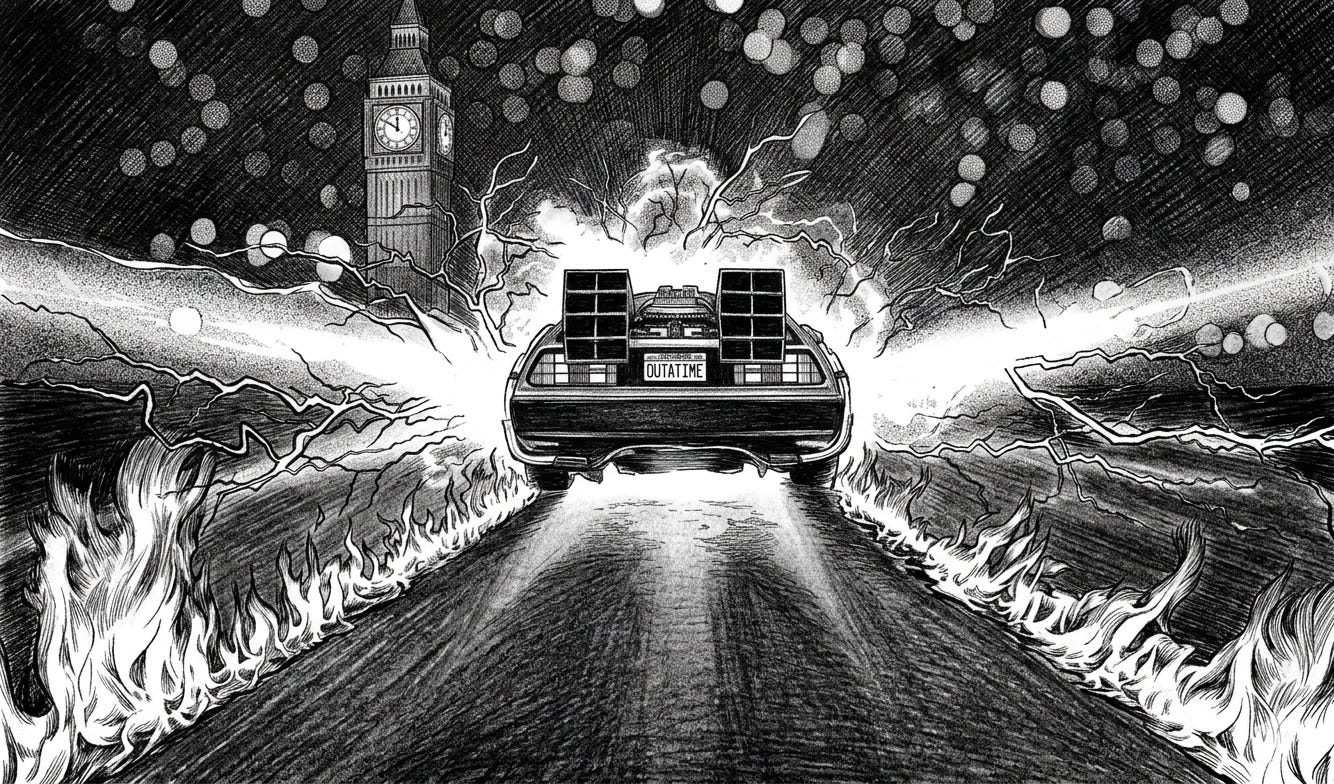
“Let go of the past, let go of the future, let go of the present, and cross over to the farther shore of existence.” Chapter 24, Craving, in The Dhammapada, The Buddha’s Path to Wisdom
Biologically, we are wired to want. You want to eat, you want to relax, you want to shop, you want to change… Dopamine is the primary driver. It motivates you to act, but also to forever crave.
And there’s the trap. The dopamine transports you into another dimension. Call it the future.
That craving keeps you moving, but always looking ahead. Your next meal. Your coffee in the morning. Socializing. Working towards a goal. Even scrolling on your phone. Dopamine is released in anticipation. By the time you actually start the activity or have your first sip or bite, the so-called dopamine reward has already been released.
It strips away your capacity to be in the here and now. You cannot see what is here, because you are always somewhere else.
And our modern society is fundamentally built around systems that capture this behavior, specifically to keep you coming back for more. Name it consumerism, capitalism or another label. Regardless, the capture systems are everywhere, ubiquitous and we take them for granted. They are part of a daily life.
This is not a bash on the system(s). Just a wake up call to understand their capture mechanism.
Here’s what it looks like in your life. Let’s say you give in to the craving. You spend 1 hour scrolling on your phone. One day you wake up upset and decide you want to change. So you try. You avoid the phone, avoid the apps, for a day, a week, a month. You’ve even managed to temporarily change your behavior.
The truth is, there will always be the possibility for you to fall back in. Because the dopamine system is wired into your brain.
Give any recovered addict a taste of their preferred vice, and they fall right back to square one. Or at least, the door opens again.
The reality is these dopamine trigger and capture systems are all around us. The way out isn’t what you think it is.
You must wake up.
Easy to say. Hard to do. And you have to keep doing it for the rest of your life. Be awake when you are awake. Be asleep when you sleep. Until you really see this, you will always fall back into some form of it.
You cannot eliminate the effects of dopamine. It serves extremely useful purposes. Get rid of it and you fall into depression, apathy, an unwillingness to do anything. Have too much of it, and you likely crash into anxiety, impulsiveness, and eventually back into depression.
Modern life is full of dopamine, little presence. The work, then, is not to fight this system. It’s to stop being run by it.
The Three Moves
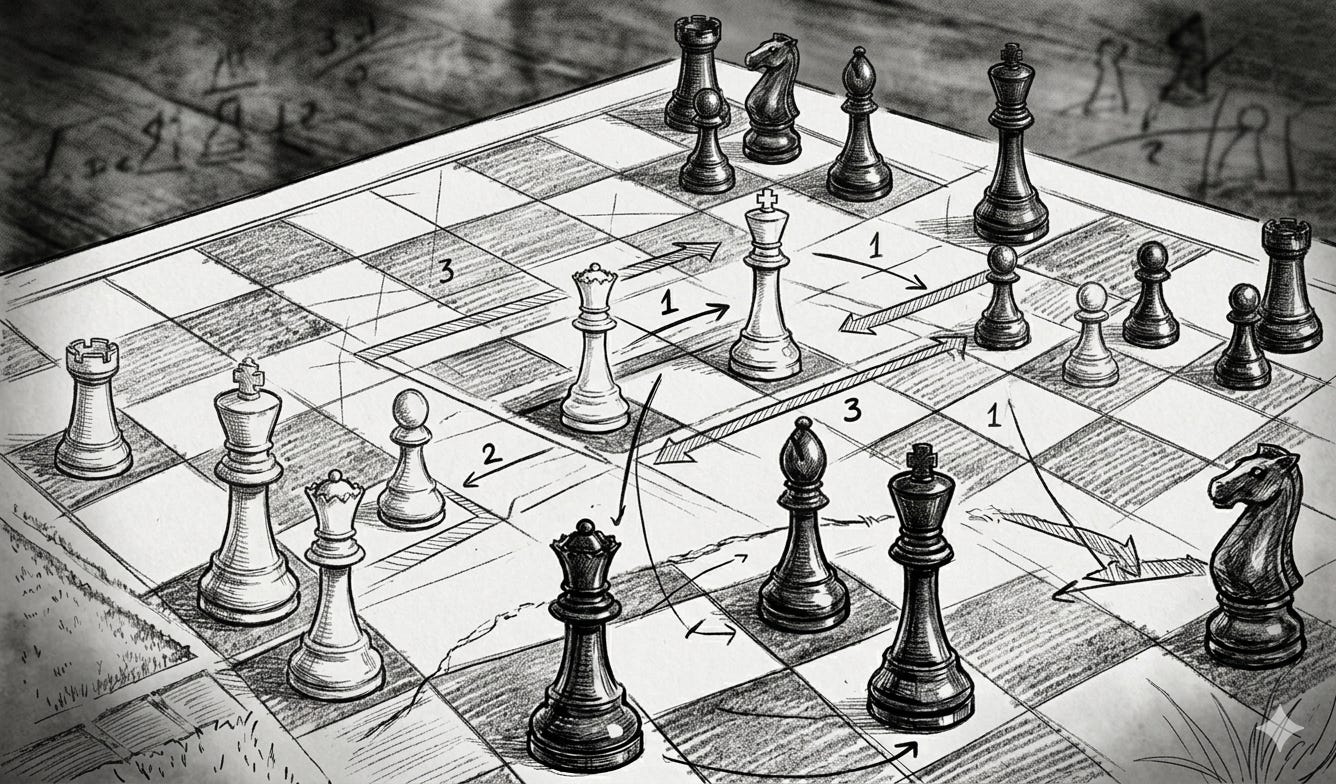
So what do you do? You cannot escape the system. You can only learn to see it, and from seeing, learn to work with it.
Here are three moves you can make:
Cheap dopamine vs earned dopamine: the move toward quality
There is an important difference between easy dopamine and earned dopamine. One is effortless. The other requires control.
We all know easy, low-friction dopamine. It is the easiest to obtain. Social media. Junk food. Drugs. Alcohol. Nicotine. Notifications. The endless scroll. The instant high.
Earned dopamine is higher-friction and slower. Exercise. Hard tasks that require deeper thinking. Focused breathing or meditation. Creative work. Time in nature.
Easy dopamine produces big peaks but at a cost. Each high pulls your baseline lower, until you need more just to feel normal. Earned dopamine works differently. You pay the cost up front, and your baseline rises rather than crashes.
Nevertheless, easy dopamine, and pleasure, are not inherently bad. The question is rather noticing what happens after. Does the dopamine reward leave you clearer, steadier, more alive? Or does it leave you foggier, emptier, and reaching for the next hit?
And if you seek clarity, quality and to be more awake, the scale tilts strongly toward the earned dopamine. These earned tasks reinforce the prefrontal cortex (PFC), which is what enables you to stop, pause, and control the release of that dopamine. Particularly tasks that increase oxygen to the brain, like exercise, meditation or even going for a walk, will reinforce the PFC and improve cognitive function.
Detox and awareness: the move toward clarity
Detoxes can also help. And this means not just social media. Also from other substances like caffeine or any other excesses you may have.
Be as clear as possible from external toxins, or at least extremely aware of all the external stimulants you have introduced. Because you will naturally start creating toxins throughout the day. Anxiety building up in traffic. An unexpected deadline. The effects of poor sleep.
Your craving for coffee at 9am is a habit. It is the anticipation of getting your coffee hit at that similar time that releases dopamine, and it has become your routine.
Notice the patterns. Watch the systems. The move is you noticing them.
Rechannel, don’t cold turkey: the move toward redirection
We tend to think in extremes. Total elimination. Go cold turkey. Perhaps completely eliminating may be necessary for severe addiction, but it really isn’t for most other things.
Instead of going cold turkey, accept that it exists, accept that you are fallible, and work with dopamine to your benefit.
The phone, the computer, and the apps enable us to do great things. But they are also an easy gateway to retriggering these behaviors and this dopamine rush. The aim is not to reject these tools. The aim is to know yourself well enough to use them.
Dopamine, and equally addiction, are primal. Technology industrialized the mechanism of capture. A.I. just reinforced it.
So the question becomes more practical. What are you avoiding? Why are you avoiding that task? There is usually something around challenge or difficulty which causes friction to begin.
A mindset shift is required. See it as a game. Try to hack your own mechanisms. Understand the way you work. Make it work for you.
Build Your Own Capture System
If you are working on your own personal projects, trying to start a new business or side project, here is the move:
Create your own capture system for that goal specifically.
Think: How can you create a capture system that pulls you toward your own project, the same way the apps pull you toward theirs? Find the flow there. Capture your own attention, the way the apps do, but towards your goal instead of someone else’s.
The same biological and man-made machinery that is currently capturing you can be redirected. Same wiring, different direction. That is the rechannel. That is the inside-out work.
The game is on. It continues. The practice never ends.
Seek balance. Seek awareness. Practice these moves.
You cannot change what you cannot see. But once you see, the work becomes clearer. You do not need to escape the system. You only need to stop letting it run you, and start playing it yourself.